Your Forest Podcast
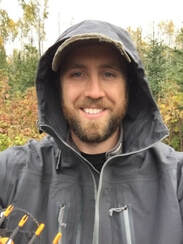
Back in the day with Kendrick Brown and Tamara Fletcher
by Matthew Kristoff 05 August 2020
"Ever wonder what your backyard looked like 10,000 years ago? 100,000 years ago? 1,000,000 years ago? I did, so I went looking for someone with some answers. The boreal forest covers 33% of the world’s forested area making it the biggest forest in the world. Canada contains 28% of the world’s boreal forest and I wanted to learn how it came to be the way we see it today. How fast did things change? How much change was there? Learning from our past is a great way to help us understand our future. What better way to understand the rate of our changing climate than to look at how it compares to climates of the past."
Back in the day with Kendrick Brown and Tamara Fletcher
by Matthew Kristoff 05 August 2020
"Ever wonder what your backyard looked like 10,000 years ago? 100,000 years ago? 1,000,000 years ago? I did, so I went looking for someone with some answers. The boreal forest covers 33% of the world’s forested area making it the biggest forest in the world. Canada contains 28% of the world’s boreal forest and I wanted to learn how it came to be the way we see it today. How fast did things change? How much change was there? Learning from our past is a great way to help us understand our future. What better way to understand the rate of our changing climate than to look at how it compares to climates of the past."
Science News
What the Pliocene epoch can teach us...
By Alexandra Witze 8:00am, November 28, 2017
Now, a new group of biologists, geoscientists and other experts in past landscapes have banded together in a project called PoLAR-FIT, for Pliocene Landscape and Arctic Remains — Frozen in Time. The team is focusing on the Arctic because, just as today’s Arctic is warming faster than other parts of the planet, the Pliocene Arctic warmed more than the rest of the globe. “That’s what we call polar amplification,” says Tamara Fletcher, a team member and paleoecologist at the University of Montana in Missoula. “It was even more magnified in the Pliocene than what we’re seeing today.”
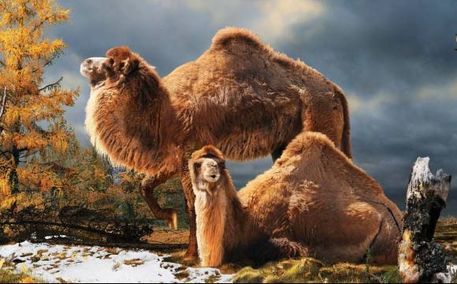
BLAST FROM THE PAST Three million years ago, Earth’s climate was so warm that the High Arctic supported forests (illustrated) in which camels and other animals roamed. (Image: Julius T. Csotony)
What the Pliocene epoch can teach us...
By Alexandra Witze 8:00am, November 28, 2017
Now, a new group of biologists, geoscientists and other experts in past landscapes have banded together in a project called PoLAR-FIT, for Pliocene Landscape and Arctic Remains — Frozen in Time. The team is focusing on the Arctic because, just as today’s Arctic is warming faster than other parts of the planet, the Pliocene Arctic warmed more than the rest of the globe. “That’s what we call polar amplification,” says Tamara Fletcher, a team member and paleoecologist at the University of Montana in Missoula. “It was even more magnified in the Pliocene than what we’re seeing today.”
BLAST FROM THE PAST Three million years ago, Earth’s climate was so warm that the High Arctic supported forests (illustrated) in which camels and other animals roamed. (Image: Julius T. Csotony)
|
The Conversation
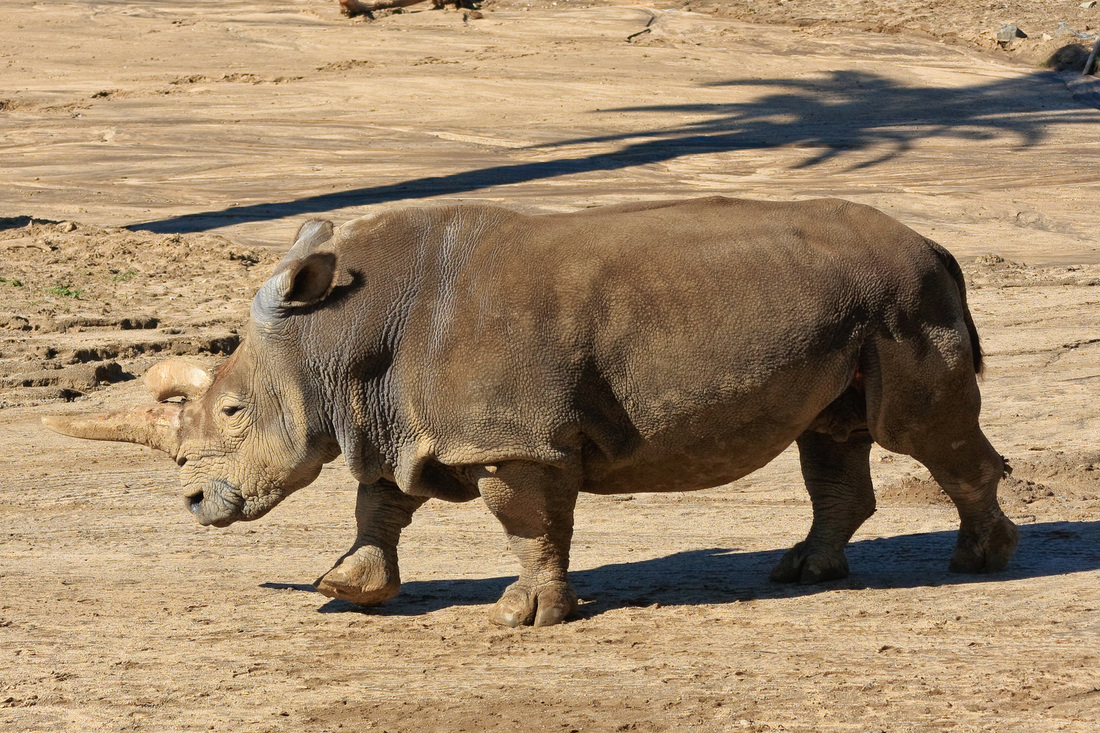
Before we build Jurassic World... June 8, 2015 4.08pm EDT "The most common arguments against de-extinction hail from conservationists themselves. De-extinction is an expensive process and the concern is that the limited resources allocated to the conservation of living organisms may be diverted to pay for de-extinction research." Facing extinction: one of the last remaining Northern White Rhinos. Flickr/Don McCrady, CC BY-NC-ND |

De-extinction & Jurassic World in the real world
ABC Gold Coast 91.7 - Drive Time, 9th June 2015.
|

De-extinction
ABC Adelaide 891 - Afternoons, 10th June 2015.
|